
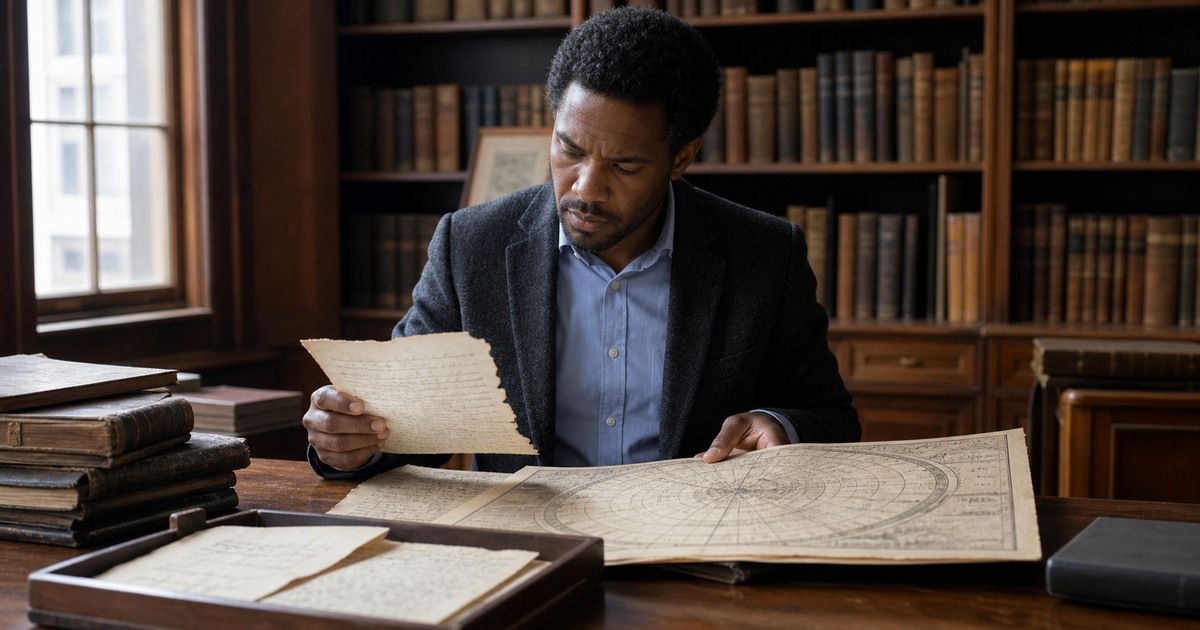
Stories about leaders and psychics often blend a documented consultation with decades of embellishment. A better history asks what the archive actually supports, what remains disputed, and why powerful people may still seek symbolic guidance.
Quick Guide
- Look for a primary record, institutional archive, diary, letter, or direct interview.
- Use historically accurate labels: astrologer, spiritualist, medium, adviser, and psychic are not interchangeable.
- Separate consultation from control; asking for guidance does not prove that it determined policy.
- Treat anonymous anecdotes and copied celebrity lists as leads, not evidence.
Source
Find the earliest traceable record, not the loudest retelling.
Context
Ask what grief, danger, religion, politics, or custom surrounded it.
Scope
Identify what was discussed and what influence is actually documented.
Limit
State uncertainty instead of filling gaps with drama.
Why Powerful People Seek Unconventional Counsel
Leadership does not remove uncertainty. It concentrates it. Heads of state, public figures, and executives make decisions with incomplete information while carrying responsibility, scrutiny, and personal fear. Some turn to religion, dreams, astrology, spiritualism, or intuitive advisers alongside conventional counsel. The consultation may provide comfort, ritual, perspective, or a feeling of order. None of those motives proves supernatural accuracy.
Historical language also matters. In one era, astrology overlapped with astronomy, medicine, navigation, and court culture. In another, séance spiritualism became a way to process mass bereavement. Calling every historical adviser a modern “psychic” erases those differences.
Elizabeth I and John Dee: Documented, but Often Oversimplified
Royal Museums Greenwich describes John Dee as a mathematician, scientist, astrologer, astronomer, court adviser, and one of the great library owners of his time. Its archival materials also connect him to Queen Elizabeth I and say he suggested a date for her coronation. Dee worked on navigation and calendar reform and later recorded attempts to communicate with angels through a scryer.
This is a strong example of why labels can mislead. Dee was not simply a fortune-teller whispering predictions. His court role existed in a sixteenth-century intellectual world where mathematics, celestial observation, astrology, theology, and imperial navigation could sit much closer together than they do today. The record supports consultation and influence in specific areas; it does not support every dramatic claim attached to his name.
The Lincolns and Civil War Spiritualism
Library of Congress material notes Mary Todd Lincoln’s connection to spiritualism after the death of her son Willie. A scholarly volume held by the Library describes Abraham and Mary Lincoln attending séances in the White House in an effort to communicate with him. The wider context was a devastating civil war, when many families were grieving people killed or missing.
It is important not to flatten grief into spectacle. The best-supported claim is that spiritualist practices reached the White House and were part of Mary Lincoln’s mourning. Claims that spirits directed the administration, supplied military intelligence, or controlled presidential decisions require separate evidence and should not be assumed.
Nancy Reagan and Joan Quigley
The Ronald Reagan Presidential Library preserves news footage concerning Nancy Reagan and astrologer Joan Quigley. Public accounts say Nancy consulted Quigley after the 1981 assassination attempt, especially around the timing and safety of presidential travel and appearances. A 1985 interview preserved by the library shows President Reagan describing newspaper astrology as amusement and denying that it then guided his own scheduling.
Those records support a careful conclusion: consultation occurred, and concern about danger was central to its reported use. They do not justify the sensational claim that an astrologer secretly “ran” the presidency or determined every policy decision.
| Claim level | What supports it | How to write it |
|---|---|---|
| Documented | Primary record or reputable institutional archive | State the specific fact and source |
| Attributed | Named memoir, witness, or historian | Name the source and possible limits |
| Disputed | Credible accounts conflict | Describe the disagreement |
| Rumored | Anonymous or circular retellings | Do not present it as fact |
Why the Stories Grow
Famous names lend authority to unusual beliefs. A modest fact—someone met an astrologer—can grow into an all-purpose claim that every success came from prediction. Repetition hides missing evidence, and readers may confuse specificity with credibility. Lists also collapse historical eras, treating a Renaissance court philosopher and a twentieth-century telephone astrologer as the same role.
Readers who want to examine prediction claims can start with whether psychics can predict the future. The site’s overview of different forms of divination also helps distinguish astrology, mediumship, tarot, and other practices.
What Consultation Does—and Does Not—Show
Consulting an unconventional adviser may show belief, curiosity, grief, fear, cultural convention, or a search for emotional steadiness. It does not prove that the adviser was correct. It also does not prove irrationality in every other part of a leader’s work. Historical assessment should examine the decision process, other advisers, surviving records, and outcomes rather than making a personality diagnosis from one episode.
A Responsible Way to Use This History
- Begin with the narrowest documented statement.
- Name the source and its relationship to the event.
- Place the episode in its political and personal context.
- Distinguish belief, consultation, scheduling, policy, and outcome.
- Say when records are missing or interpretations conflict.
- Avoid borrowing authority: a leader’s interest does not validate a modern reader.
Leadership Still Requires Accountable Decisions
Symbolic practices may prompt reflection, but public decisions should remain open to evidence, law, ethics, expert review, and democratic accountability. The most useful lesson is not that leaders possess secret knowledge. It is that uncertainty affects everyone—and that the quality of a decision depends on how advice is tested, weighed, and corrected.
Key Takeaways
- Elizabeth I’s relationship with John Dee, Lincoln-era spiritualism, and Nancy Reagan’s astrological consultation have documentary support, but their scope is often exaggerated.
- Historical titles and practices must be interpreted in their own intellectual and cultural context.
- Consultation does not prove control, prediction accuracy, or supernatural causation.
- Primary records, careful attribution, and explicit uncertainty create a more trustworthy account.
Frequently Asked Questions
1. Did Queen Elizabeth I consult John Dee?
Royal Museums Greenwich identifies Dee as a court astronomer and adviser and says he suggested a coronation date, while also working in mathematics and navigation.
2. Was John Dee a psychic?
That modern label is incomplete. He was a mathematician, astronomer, astrologer, navigator, scholar, and court adviser who also pursued angelic communication.
3. Did the Lincolns hold séances in the White House?
Library of Congress materials and scholarship in its collection describe séances connected to Abraham and Mary Lincoln after their son Willie’s death.
4. Did spirits guide Abraham Lincoln's policies?
The cited records support participation in spiritualist practices, not a conclusion that spirits controlled policy or military decisions.
5. Why was spiritualism popular during the Civil War?
Mass death, missing soldiers, and unresolved grief helped make promised communication with the dead emotionally compelling.
6. Did Nancy Reagan use an astrologer?
Archival and public records support that she consulted Joan Quigley, particularly after the assassination attempt and around scheduling concerns.
7. Did astrology run the Reagan White House?
That sweeping claim goes beyond the evidence. Consultation and reported scheduling input do not equal control over every policy decision.
8. Why do famous-leader psychic stories spread?
They combine authority, secrecy, uncertainty, and drama, and copied lists often repeat claims without tracing the original source.
9. What counts as a primary historical source?
Examples include contemporary letters, diaries, official records, recordings, transcripts, and material created by direct participants.
10. Are memoirs reliable sources?
They can be valuable first-person evidence but may contain selective memory, self-presentation, or hindsight and should be compared with other records.
11. Is astrology the same as mediumship?
No. Astrology interprets celestial patterns, while mediumship claims communication with spirits. Their histories and methods differ.
12. Does a leader's belief validate a psychic practice?
No. Status or power does not establish that a method works; that would be an appeal to authority.
13. Can leaders use symbolic practices ethically?
Private reflection is different from public decision-making. Official actions should remain accountable to evidence, law, ethics, and affected people.
14. How can I check a viral historical claim?
Search for the earliest source, prefer reputable archives, inspect exact wording, and see whether independent historians agree.
15. What should an article say when evidence conflicts?
Name the competing accounts, explain each source’s limits, and leave the conclusion appropriately uncertain.