Divination practices interpret symbols, patterns or impressions to seek meaning or guidance. The methods differ, and knowing their terminology does not establish that they reveal hidden facts or predict events.
Nine methods you may encounter
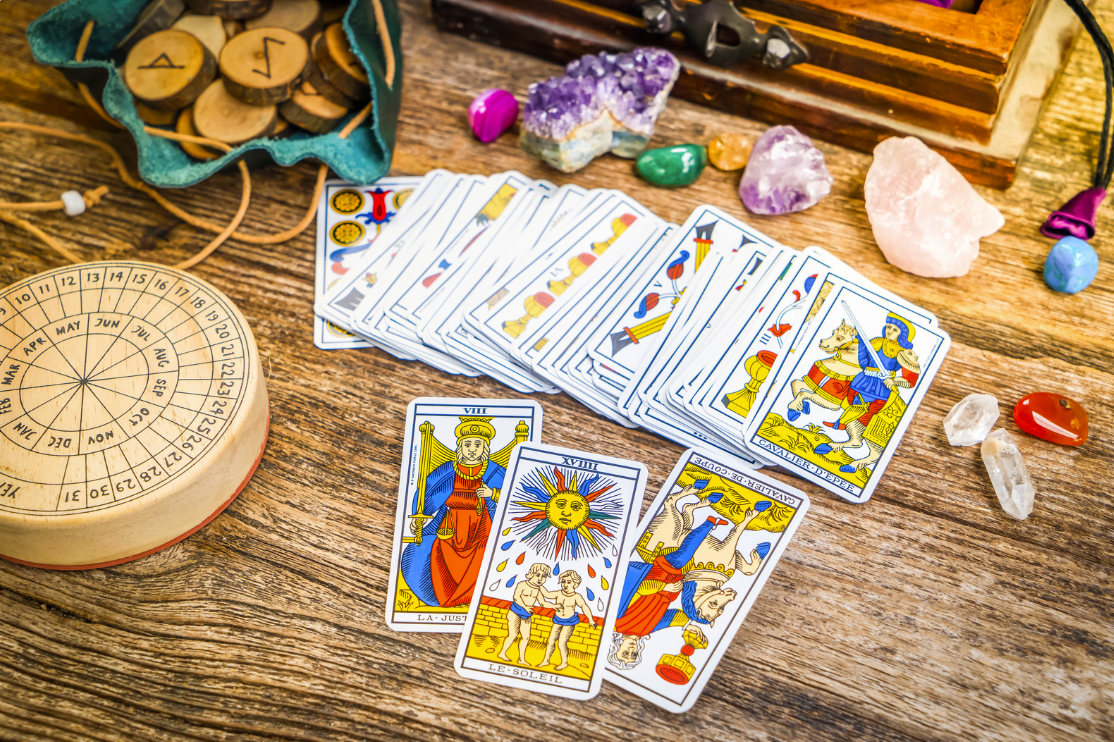
- Tarot: interpreting card images and their positions in a spread. Tarot cards developed in fifteenth-century Italy, rather than ancient times; see the Metropolitan Museum of Art’s history.
- Runes: interpreting selected or cast marked pieces within a chosen system.
- I Ching: consulting a text and its hexagram interpretations. Translations and approaches differ.
- Pendulum: interpreting a suspended object’s movement, often through assigned yes/no meanings.
- Automatic writing: writing while allowing associations to arise with limited deliberate planning.
- Psychometry: interpreting impressions while holding an object.
- Scrying: looking at a surface or object and interpreting images or associations.
- Tea-leaf reading: assigning meanings to shapes left by tea leaves.
- Astrology: interpreting celestial positions within an astrological system.
Ask how meaning is assigned
Does the reader use a stated reference, personal associations or both? A clear description helps you understand the process. It does not itself verify a prediction.
Keep the question within useful limits
A symbol can prompt reflection about your own choices. It cannot establish another person’s consent, identify a health problem or determine whether a consequential risk is safe. In particular, pendulum movements should not be used as a diagnostic test.
If trying a practice, record the question and interpretation before the outcome. Keep uncertainty visible, and avoid repeated consultations solely to obtain the answer you want.