

One misconception in relationships is that happy couples don’t fight. The truth is that long-term relationships have tension, disagreements, and recurring differences. Conflict isn’t the problem. Healthy couples know how to respond the right way when conflicts show up.
Dr. John Gottman and other relationship experts say that around 69% of relationship problems are perpetual instead of solvable. These issues can be ongoing, and they are normally tied to differences in emotional needs, communication styles, lifestyle preferences, values, and personality. For more on this research, see The Gottman Institute.
A recurring difference may need ongoing discussion rather than a permanent solution. That does not mean a problem should be ignored or that every incompatibility can be managed.
Safety comes first: Threats, coercion and abuse are not ordinary differences to compromise over. If you feel unsafe, seek appropriate support. See the National Domestic Violence Hotline’s relationship guidance.
Conflict is Normal
Conflict happens because people have different emotional patterns, experiences, and expectations even when building a life together. Even couples that are compatible disagree about things like:
- Finances.
- Priorities.
- Time management.
- Emotions.
- Expression.
- Family relationships.
- Intimacy.
- Household responsibilities.
- Careers.
These differences happen because people feel, think, and process life differently. Avoiding a difficult topic can leave needs unspoken. Discussing a disagreement respectfully gives both people a chance to explain what matters. Healthy conflict helps couples to:
- Clarify what their emotional needs are.
- Build trust through resolution and repair.
- Understand each other in a deep way.
- Strengthen emotional resilience.
The goal isn’t avoiding disagreements, but it’s about keeping emotional safety during them.
Managing and Resolving Conflict
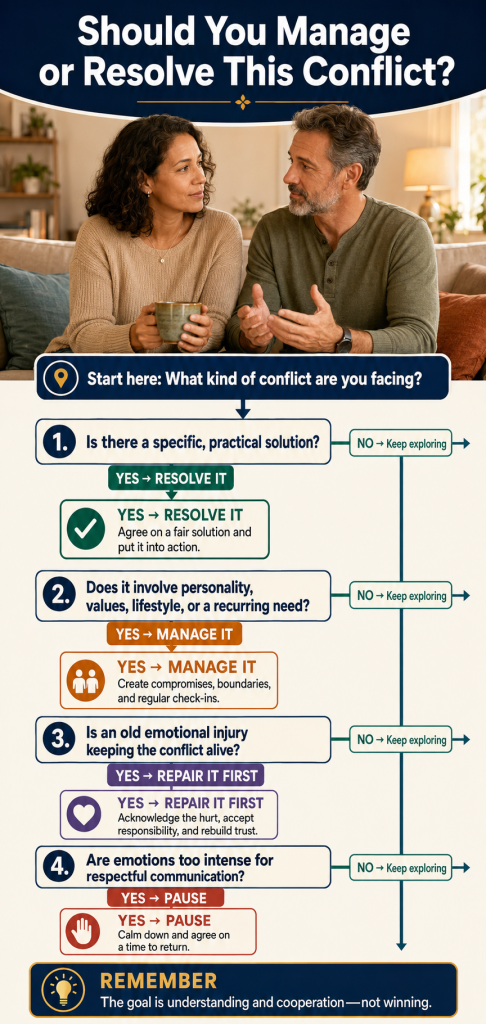
Some couples look at every disagreement as something that has to have a final solution. Perpetual relationship issues don’t usually disappear totally, but they evolve and reappear in different forms throughout the relationship.
Resolving Conflict
Resolving Conflict can mean finding a permanent answer or getting rid of the disagreement completely. This works for some problems, such as:
- Planning schedules.
- Deciding who handles which tasks.
- Picking a vacation spot.
These are issues that are solvable with concrete outcomes.
Managing Conflict
Managing conflict means that you learn to work through issues respectfully and constructively, even when a full agreement won’t happen. Here are some examples:
- One partner might want to save money while the other likes to spend.
- One partner might want alone time while the other likes to stay close constantly.
- One partner might like to express things verbally while the other withdraws when stressed.
These personality differences can remain stable and healthy; couples don’t try to erase the differences, but they focus on reducing emotional damage and increasing an understanding for each other.
Couples Getting Stuck in Arguments
Some couples have recurring arguments because it’s not about surface issues. Here are some examples:
- An argument about the dishes might mean feelings of being unsupported.
- A disagreement about texting might mean insecurity or emotional neglect.
- A fight about money might mean freedom or control.
Ask whether there is an emotional concern as well as a practical one. Do not assume every disagreement conceals a deeper issue.
This is why there are some arguments that can keep showing up and repeating for years and years. The emotional needs under the conflict are never fully handled.
Conflict Pattern 1: Handling Everyday Arguments
The first type of conflict involves the normal disagreements that happen in long-term relationships. Even healthy couples experience frustration, tension, and misunderstandings.
What often matters most is how the conversation begins. When discussions start with blame, criticism, or anger, they usually become more emotionally intense very quickly.
Emotionally healthy couples often recognize rising tension early and slow the conversation down before things escalate further.
Why Emotions Escalate So Quickly
During a tense disagreement, you may notice:
- Listening to become harder.
- Defensiveness to increase.
- Empathy becomes more limited.
This is why arguments can suddenly spiral even when the original issue seemed small.
A pause may give both people time to choose how to continue. Agree on when to return to the topic rather than leaving it indefinitely unresolved.
Starting Conversations More Gently
The emotional tone at the beginning of a conversation often affects how the whole situation will go.
Harsh openings usually create harsher reactions, while calmer communication tends to create safer discussions. For example, instead of saying things like this:
- “You never listen to me.”
You could say something like this instead:
- “I felt hurt earlier and want to talk about it.”
Small wording changes can make people feel less attacked and more open to listening.
Listening Instead of Trying to Win
Many people listen while preparing their next response instead of truly trying to understand the other person. Healthy communication often involves things like:
- Letting each person speak without interruption.
- Listening carefully before reacting.
- Trying to understand instead of immediately defending yourself.
Feeling emotionally understood is often more important than winning an argument.
Small Repairs Matter During Conflict
Strong relationships are not built on completely avoiding conflicts. They are built on repairing emotional tension before it grows worse. Healthy repair moments can include things like:
- A sincere apology.
- Gentle humor.
- A softer tone or body language.
- Acknowledging the other person’s feelings.
These small moments can quickly reduce emotional tension and help couples reconnect faster after disagreements.
Conflict Pattern 2: Unresolved Emotional Hurt
Some relationship problems are connected less to the present moment and more to emotional pain from the past. These emotional wounds often involve moments where someone felt:
- Rejected.
- Abandoned.
- Betrayed.
- Emotionally unsupported.
Even years later, these experiences can still affect how people react emotionally in the relationship.
Why Old Pain Keeps Returning
A current disagreement may remind someone of an earlier hurt. Ask about that connection rather than assuming it.
If an earlier experience feels relevant, a person may describe:
- Emotional reactions that feel larger than the situation itself.
- Old resentment returning repeatedly.
- Small disagreements are becoming overwhelming quickly.
Without emotional repair, trust and emotional safety slowly weaken over time.
Logic Alone Usually Doesn’t Heal Emotional Pain
One normal mistake during conflict is trying to dismiss emotional pain with logic. Some comments might include:
- “That happened a long time ago.”
- “You’re overreacting.”
often make emotional wounds feel worse because the person feels emotionally dismissed instead of understood. Healing usually starts with emotional acknowledgment first.
What Emotional Repair Often Looks Like
Healthy repair conversations usually involve a few important things:
- Allowing both people to explain how they felt emotionally.
- Validating each other’s experiences, even when perspectives differ.
- Exploring deeper fears or emotional triggers.
- Taking responsibility for hurtful behavior.
- Discussing how trust and safety can improve moving forward.
Repair becomes possible when both people feel emotionally heard instead of emotionally attacked.
Conflict Pattern 3: Feeling Stuck in the Same Arguments
Some conflicts never seem to fully disappear. Couples may keep having the same disagreement in different forms over and over again.
These conflicts often involve deeper issues connected to identity, values, or long-term goals. Some examples include things like:
- Different views about children or family.
- Conflicting career priorities.
- Different emotional needs around closeness or independence.
These topics can matter deeply. Some goals, such as whether to have children, may be incompatible rather than something either person should be pressured to compromise on.
Why These Conflicts Feel So Emotional
Under many repeated arguments are deeper emotional fears and insecurities. People might wonder to themselves:
- “Do my needs matter here?”
- “Will I lose myself in this relationship?”
- “Can my partner fully accept me?”
When these fears stay unspoken, couples often remain trapped in repetitive emotional cycles instead of having productive conversations.
Going from Control to Being Curious
Couples that are unhappy with each other often focus on changing each other, and healthy couples turn their control to curiosity, such as asking things like:
- Why does this situation matter so much?
- What dream is under this position?
- What fear is under this position?
- What need is being protected?
These questions invite explanation; they do not guarantee agreement or a positive response. Here is an example:
- Having a desire to save money might reflect instability as a child.
- A need to travel might show the need for identity or freedom.
Understanding these things creates empathy for each other.
Compromising Isn’t Losing
There are some couples that are afraid of compromising because they think this means that they’re losing or surrendering. Having a healthy compromise means things like:
- Making room for both partners’ emotional needs.
- Respecting differences instead of trying to change them.
- Finding overlap.
Long-term relationship stability is less about perfect agreements and more about emotional flexibility.
Emotional Safety and Love
Emotional safety matters when discussing differences. Notice whether both partners feel:
- Safe expressing themselves.
- Vulnerable.
- Heard when having conflict.
- Respected even when disagreeing.
Without having emotional safety, even small conflicts can feel threatening to the relationship.
Final Thoughts: Conflict Doesn’t Mean the Relationship is Failing
Conflict doesn’t mean that the relationship is failing; in some situations, it just shows that two people are trying to share a life while living different stories and having different needs and emotional patterns.
The healthiest couples aren’t the ones that are perfect and avoid conflict, but they’re the ones that learn how to:
- Stay emotionally connected when conversations are hard.
- Repair emotional injuries after having a conflict.
- Accept differences without resenting them.
- Create a safe place even when there isn’t a full agreement.
Long-term relationships don’t last because they get rid of problems entirely, but they last because they are able to face problems together without losing empathy, respect, and the emotional connection with each other.