Palm reading assigns meanings to hand features and lines. It can be approached as a symbolic practice, but a palm does not provide a reliable forecast of lifespan, relationship success or a person’s character.
Start with the method, not a verdict
Readers differ about whether to use the dominant hand, the other hand or both. A guide should explain its convention. Comparing hands is not a test of which future is real.
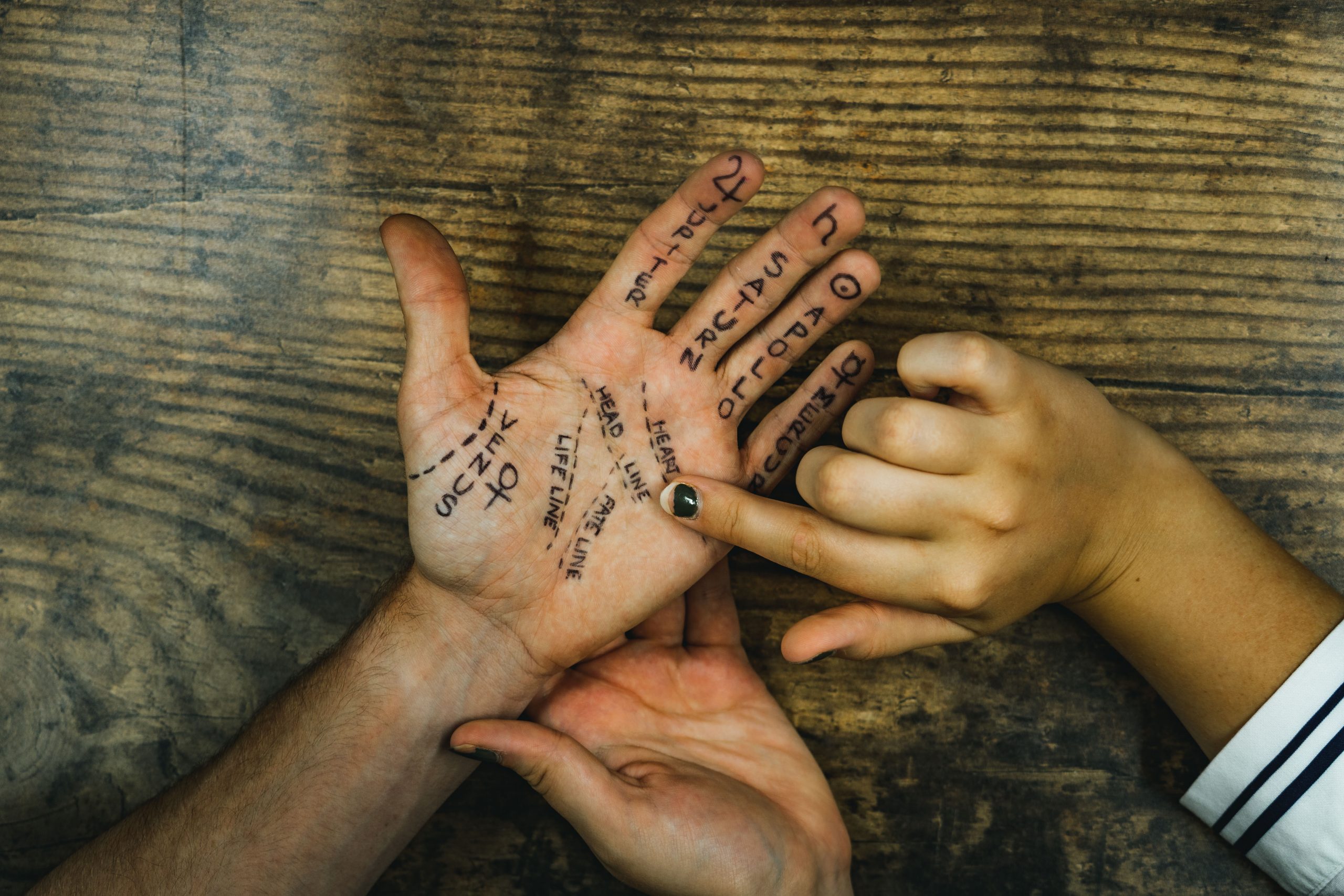
Common line names
- Heart line: a label used in interpretations about emotion and relationships.
- Head line: a label used for thinking or decision-making themes.
- Life line: a label used for vitality or life-story themes; its length does not establish how long you will live.
- Fate line: a label some readers use for direction or work-related themes; interpretations of an absent or faint line vary.
These are categories in palmistry, not medical or psychological measurements. A break or curve should not be used to diagnose a crisis or label someone lazy, manipulative or unfaithful.
Hand shapes and elements
Some systems group hands under earth, air, fire and water. Treat these as symbolic classifications, not evidence of temperament or ability. Finger length, spacing or skin appearance should not be used to decide whether someone is safe or trustworthy.
An optional reflection exercise
Choose a theme, such as decisions, and ask a question about your current life. Write your response without claiming the answer came from the line. Keep actual health concerns and important choices separate from the reading.
You do not need to pay to remove a bad fate suggested by a hand feature. A responsible discussion leaves you free to disagree, stop and make decisions using relevant evidence.