
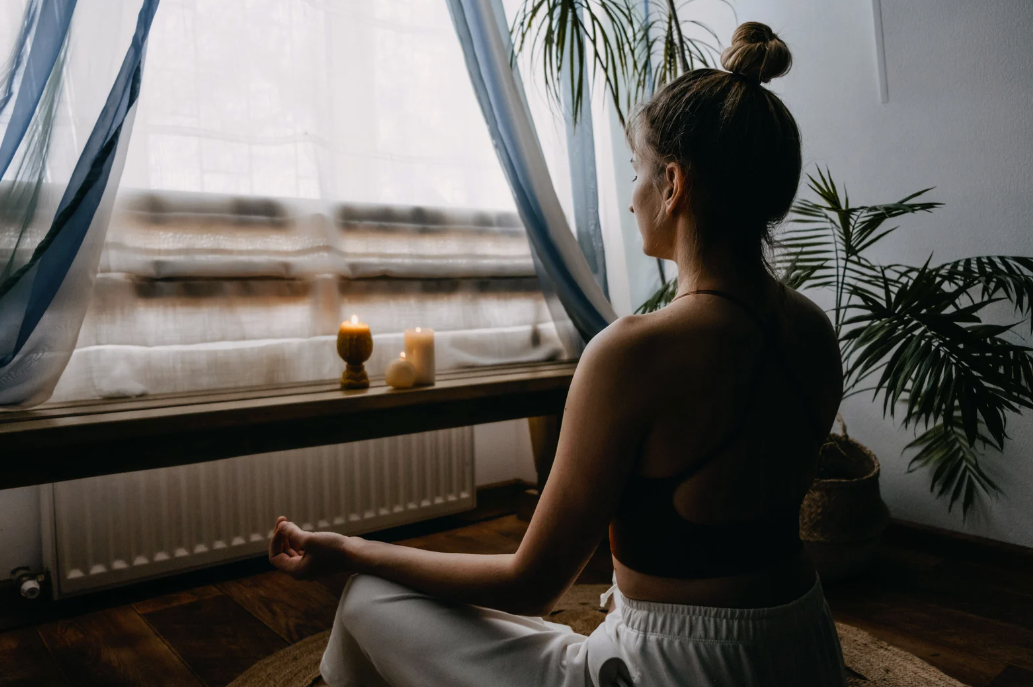
A meditation space is a place arranged for a practice you choose. It can be a chair or a small corner rather than a separate room. You do not need special energy, expensive objects or perfect silence to begin.
Choose a usable location
Consider comfort, lighting, interruptions and whether the space is shared. Make sure you can sit or stand in a way that suits you. A location that is easy to use may be more practical than one that looks impressive.
Start with less
A comfortable seat and a place to put a timer may be enough. Add a cushion or another support if needed. You can keep the area flexible rather than buying a complete set of meditation furniture.
Make sensory choices optional
You may prefer quiet, ordinary background sound or gentle music. Scents, candles and incense are not required. A plant, picture or unlit object can provide a visual focus without smoke or an open flame. Respect other people’s preferences in a shared home.
Try the space, then adjust it
Spend a short time there and notice practical issues: an uncomfortable chair, glare or noise that makes it difficult to follow the exercise. Change one thing at a time. Feeling restless does not mean the room has bad energy.
Meditation does not guarantee calm, and you do not have to continue a distressing practice. NCCIH’s overview discusses both potential benefits and limitations. The space should support your choices, including the choice to take a break.